
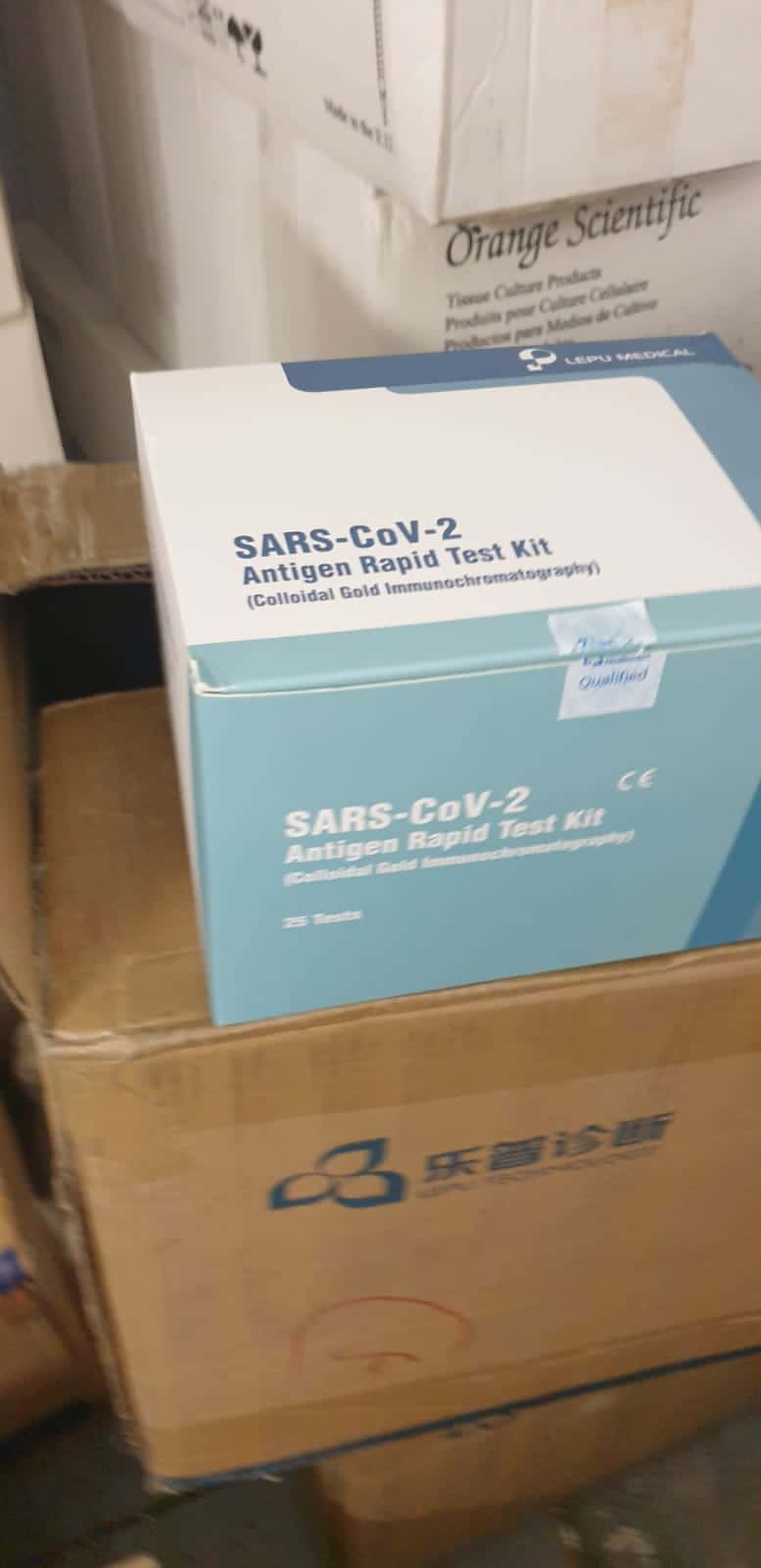
Pattern pooling for SARS-COV-2 RT-PCR screening
Goal: To judge the efficacy of pattern pooling in comparison with the person evaluation for the prognosis of COVID-19, by utilizing totally different industrial platforms for nucleic acid extraction and amplification.
Strategies: 3519 nasopharyngeal samples obtained at 9 Spanish medical microbiology laboratories had been processed individually and in swimming pools (342 swimming pools of 10 samples and 11 swimming pools of 9 samples) based on the prevailing methodology in every of the centres.
Outcomes: We discovered that 253 swimming pools (2519 samples) had been adverse, and 99 swimming pools (990 samples) had been constructive; with 241 constructive samples (6.85%), our pooling technique would have saved 2167 PCR assessments. For 29 swimming pools (made out of 290 samples) we discovered discordant outcomes when in comparison with their correspondent particular person samples: in 22/29 swimming pools (28 samples), minor discordances had been discovered; for seven swimming pools (7 samples), we discovered main discordances. Sensitivity, specificity, constructive and adverse predictive values for pooling had been 97.10% (CI95%; 94.11-98.82), 100%, 100% and 99.79% (CI95%; 99.56-99.90) respectively; accuracy was 99.80% (CI95%; 99.59-99.92) and kappa concordant coefficient was 0.984. The dilution of samples in our pooling technique resulted right into a median lack of 2.87 (CI95%; 2.46-3.28) CTs for E gene, 3.36 (CI95%; 2.89-3.85) CTs for RdRP gene and a pair of.99 (CI95%; 2.56-3.43) CTs for N gene.
Conclusion: we present a excessive effectivity of pooling methods for SARS-CoV-2 RNA testing, throughout totally different RNA extraction and amplification platforms, with glorious efficiency when it comes to sensitivity, specificity, and constructive and adverse predictive values.

Carboplatin dose capping impacts pCR price in HER2-positive breast most cancers sufferers handled with neoadjuvant Docetaxel, Carboplatin, Trastuzumab, Pertuzumab (TCHP)
Goal: Estimated glomerular filtration price (eGFR) is usually used to calculate carboplatin doses and capping the eGFR could also be used to scale back the chance of extreme dosing and toxicity. We sought to retrospectively study the impression of our carboplatin pointers on pathological full response charges (pCR) and toxicity in ladies with HER2+ breast most cancers receiving neoadjuvant docetaxel, carboplatin, trastuzumab and pertuzumab (TCHP).
Strategies: The delivered space below the curve (dAUC) was calculated [(actual carboplatin dose at cycle 1 ÷ dose calculated with uncapped/unbanded eGFR) × 6] and dichotomized on the median worth. The impression of this and different medical components on pCR price, dose depth (DI) and toxicity was assessed.
Outcomes: 124 eligible sufferers had been recognized of whom 63.7% (79/124) achieved pCR. The median dAUC at cycle 1 was 5.75 mg × ml/min. These with decrease dAUC had been extra often youthful and obese/overweight. Sufferers with decrease dAUC had considerably inferior pCR charges of 54.8% (34/62) vs 72.6% (45/62), respectively (p = 0.040). Related outcomes had been seen within the ER+ subgroup; 45.2% (19/42) vs 68.3% (28/41), p = 0.037%, whereas no important distinction was seen amongst ER- sufferers; 75.0% (15/20) vs 81.0% (17/21), p = 0.72. DI and toxicity had been comparable between the 2 dAUC teams.
Conclusions: The general pCR price was excessive in sufferers with HER2+ breast most cancers receiving the TCHP routine; nevertheless, carboplatin dose capping resulted in inferior pCR charges, significantly within the ER+ subgroup. To make sure optimum dosing, isotopic measurement of renal operate is warranted in sufferers who would in any other case have their eGFR and dose capped.
Medical sensitivity and interpretation of PCR and serological COVID-19 diagnostics for sufferers presenting to the hospital
The prognosis of COVID-19 requires integration of medical and laboratory information. Extreme acute respiratory syndrome coronavirus 2 (SARS-CoV-2) diagnostic assays play a central position in prognosis and have mounted technical efficiency metrics. Interpretation turns into difficult as a result of the medical sensitivity adjustments because the virus clears and the immune response emerges.
Our aim was to look at the medical sensitivity of two most typical SARS-CoV-2 diagnostic check modalities, polymerase chain response (PCR) and serology, over the illness course to supply perception into their medical interpretation in sufferers presenting to the hospital. We carried out a single-center, retrospective research. To derive medical sensitivity of PCR, we recognized 209 PCR-positive SARS-CoV-2 sufferers with a number of PCR check outcomes (624 complete PCR assessments) and calculated every day sensitivity from date of symptom onset or first constructive check.
Medical sensitivity of PCR decreased with days submit symptom onset with >90% medical sensitivity through the first 5 days after symptom onset, 70%-71% from Days 9 to 11, and 30% at Day 21. To calculate every day medical sensitivity by serology, we utilized 157 PCR-positive sufferers with a complete of 197 specimens examined by enzyme-linked immunosorbent assay for IgM, IgG, and IgA anti-SARS-CoV-2 antibodies.
In distinction to PCR, serological sensitivity elevated with days submit symptom onset with >50% of sufferers seropositive by no less than one antibody isotype after Day 7, >80% after Day 12, and 100% by Day 21. Taken collectively, PCR and serology are complimentary modalities that require time-dependent interpretation. Superimposition of sensitivities over time point out that serology can operate as a dependable diagnostic assist indicating current or prior an infection.